If you want a Littleton neighborhood with a true sense of place, Old Town is hard to ignore. It offers something many suburban areas do not: a real main-street setting, historic character, and the ability to get around on foot for more of your daily routine. If you are wondering what it is actually like to live near downtown Littleton, this guide will help you understand the area’s charm, walkability, home styles, and tradeoffs. Let’s dive in.
What makes Old Town Littleton stand out
Old Town Littleton is rooted in the city’s earliest history. Local milestones like the 1867 Rough and Ready Flour Mill, the 1871 railroad, and Littleton’s 1890 incorporation helped shape the area that later became Historic Downtown Littleton.
Today, the city formally recognizes the Downtown Littleton Historic District along Main Street, Alamo Avenue, and the streets in between. According to the city, historic districts are meant to preserve distinctive cultural, social, and architectural history while still allowing compatible new construction and exterior changes.
That balance is a big part of Old Town’s appeal. You get a neighborhood with visible history and a lived-in feel, but not one frozen in time.
Historic charm feels tangible here
In many places, “historic charm” is just a marketing phrase. In Old Town Littleton, it is easier to see what people mean when you walk the district and notice the classic main-street pattern of one- and two-story storefronts, recessed entries, brick and masonry facades, and a low, consistent street edge.
The city’s design guidelines point to details like aligned rooflines, stone sills, decorative belt courses, and the steady scale of storefront blocks as part of the district’s visual continuity. Littleton Town Hall also anchors the four-block Main Street core and helps define downtown’s focal point.
For you as a buyer, that means the area’s charm is not just about a few older buildings. It comes from the full streetscape, the architecture, and the way the blocks fit together.
Walkability is a real lifestyle feature
One of the biggest draws in Old Town Littleton is that daily life centers on a compact downtown business district instead of a spread-out strip-commercial layout. The Littleton DDA highlights a mix of shopping, dining, services, health and wellness businesses, and community events that support an active local core.
That kind of layout can change how you use the neighborhood. You may be able to park less often, combine errands more easily, and enjoy a more connected rhythm than you would in a typical subdivision.
Old Town also has a strong evening and weekend presence. Visit Littleton describes Town Hall Arts Center as a walkable destination surrounded by dining and shopping, and recurring events like Final Fridays keep businesses open later on the last Friday of the month.
The area’s cultural layer adds even more depth. The Littleton Museum nearby gives residents and visitors a place to explore exhibits and living-history farms that interpret local life from the 1860s and 1890s to today.
Transit access adds flexibility
Walkability in Old Town Littleton is not just about restaurants and storefronts. Transit access is part of the equation too.
The Littleton/Downtown Station sits near Alamo and Prince and serves the D line, four bus routes, and a FlexRide route. The station also includes 361 parking spaces, which can be helpful if your day combines driving and rail.
The city’s Project Downtown plan adds to that pedestrian-friendly vision with tree-lined Main Street improvements, protected bikeways on Prince Street, Alamo streetscape upgrades, and trail links through Little’s Creek. At the same time, city officials note that expanding pedestrian space can come with parking-management tradeoffs, which is useful context if you are comparing Old Town to a more auto-oriented neighborhood.
Home styles are more varied than many buyers expect
Old Town Littleton does not offer just one architectural look. That variety is one reason the area appeals to buyers who want something more distinctive than a standard suburban floor plan.
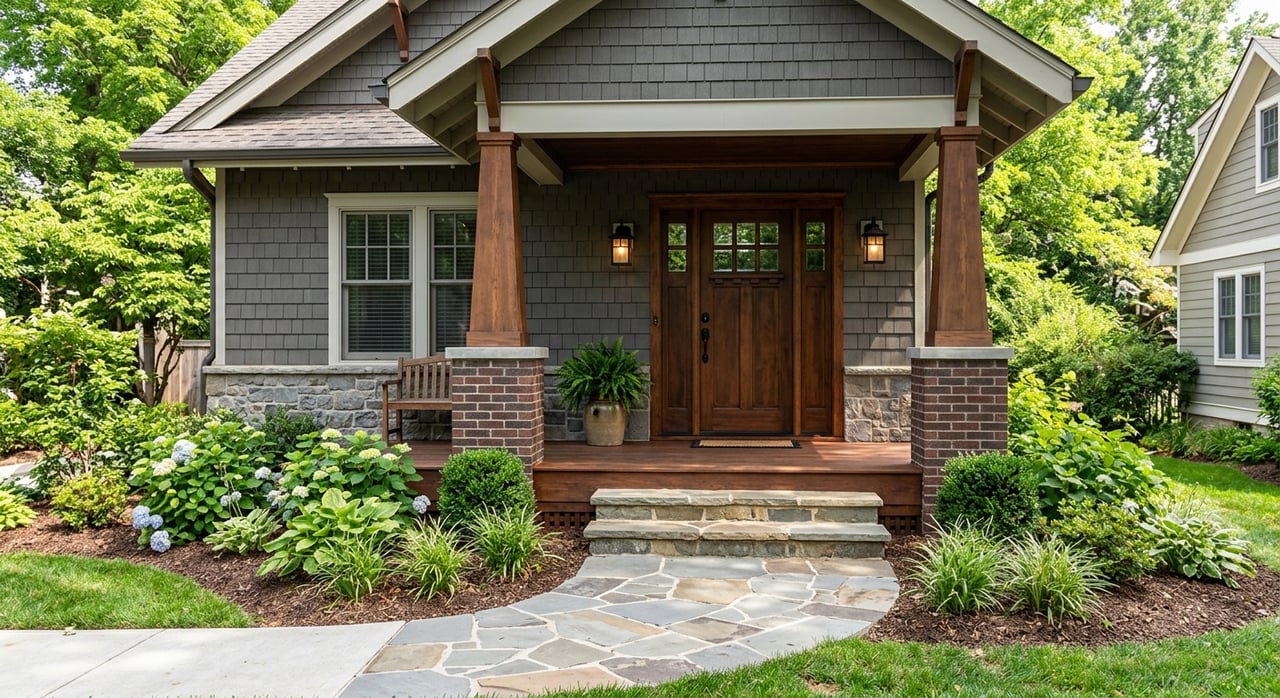
City preservation materials highlight examples like the H.S. Leach House, an 1889 Queen Anne/Victorian cottage on West Alamo. Other notable buildings include the Sanford House, a rough-faced stone, front-gabled structure, and the Little Residence on Rapp, an English/Norman Cottage built with Castle Rock rhyolite.
In practical terms, that means you may find:
- Late-19th-century cottages with period detailing
- Stone vernacular homes with a different visual texture
- Older homes that have been updated over time
- Compatible infill or newer construction near the district
The city’s design guidelines also note that residential structures along West Alamo often retain small front yards, fences, gable roofs, dormers, raised porches, and masonry or wood siding. Even where uses have changed, those details help preserve the area’s residential character.
Historic district rules do not stop all change
Some buyers hear “historic district” and assume nothing can be built or changed. That is not how Littleton frames it.
The city’s preservation policy is clear that historic districts do not prevent new construction. Instead, they review demolition and exterior alterations and encourage redevelopment that is compatible with the district’s established character.
That distinction matters if you are considering an older home that may need work, or if you are looking at a newer property near the district. In Old Town Littleton, charm and change can exist together, but the goal is for new work to feel measured rather than out of place.
What buyers should know about price and competition
At the city level, Littleton is a higher-priced south metro market. In March 2026, the median sale price in Littleton was $627,500, compared with $573,750 in Englewood, $685,000 in Highlands Ranch, and $1.45 million in Greenwood Village, according to Redfin’s market data for Littleton.
Redfin also describes Littleton as very competitive, with homes receiving about two offers on average and selling in around 18 days. For Old Town specifically, the most supported takeaway is that historic status, walkability, and transit access can support pricing above the broader city median, though the exact premium depends on the block, lot size, condition, and whether the home is original, renovated, or newer infill.
If you are shopping here, it helps to stay flexible. Two homes that seem close on a map can feel very different in layout, parking, updates, and long-term maintenance needs.
Tradeoffs are part of the package
Old Town Littleton offers a distinctive lifestyle, but it is not the right fit for everyone. The same qualities that make the area appealing can also create a few practical compromises.
For many buyers, the main tradeoffs include:
- Older-home maintenance and repair needs
- Parking constraints near the historic core
- Floor plans that may be more varied than newer suburban homes
- Lot and block-by-block differences that affect value
For many people, the payoff is worth it. You get walkability, transit access, visible history, and a neighborhood rhythm that feels different from a more conventional suburban subdivision.
Is Old Town Littleton right for you?
If you want newer layouts, more uniform streets, and fewer maintenance unknowns, another Littleton area may fit your goals better. But if you value character, a true downtown setting, and a neighborhood where architecture and daily life feel connected, Old Town Littleton deserves a closer look.
I help buyers and sellers evaluate neighborhoods with both market context and day-to-day livability in mind. If you are thinking about buying, selling, or simply comparing your options in Littleton, connect with Brandon Kass Real Estate powered by RE/MAX for local guidance tailored to your move.
FAQs
What is Old Town Littleton known for?
- Old Town Littleton is known for its historic downtown setting, classic main-street storefronts, walkability, transit access, and a mix of older homes and compatible newer construction.
How walkable is Old Town Littleton for daily life?
- Old Town Littleton is one of the more walkable parts of Littleton because shopping, dining, services, events, and cultural destinations are centered in a compact downtown district.
What types of homes are common in Old Town Littleton?
- Buyers can find a range of home styles in and around Old Town Littleton, including Victorian cottages, stone homes, updated older properties, and some newer infill designed to fit the area.
Does the Old Town Littleton historic district allow new construction?
- Yes. Littleton’s preservation policy says historic districts do not ban new construction, but exterior changes, demolition, and redevelopment are reviewed for compatibility with the district.
Are homes in Old Town Littleton more expensive than the rest of Littleton?
- They can be, since historic appeal, walkability, and transit access may support a premium over the broader Littleton median, though pricing varies by location, lot, condition, and home type.
What are the tradeoffs of living in Old Town Littleton?
- The most common tradeoffs are older-home upkeep, parking limitations near downtown, and floor plans that may be less standardized than homes in newer neighborhoods.